Skip to content
Custom peptide synthesis can feel hard to plan because one supplier says “fast,” another asks for more details, and your experiment or product schedule still needs a real date. That uncertainty creates pressure. The better solution is to treat lead time as a specification-based estimate, not a universal promise.
Custom peptide synthesis usually takes different amounts of time depending on peptide difficulty, purity, quantity, modifications, purification, lyophilization, QC, and documentation.1 For publication, I recommend using approved reference ranges such as: simple peptides: [insert range], customary peptides: [insert range], and complex peptides: [insert range], after sequence and specification review.
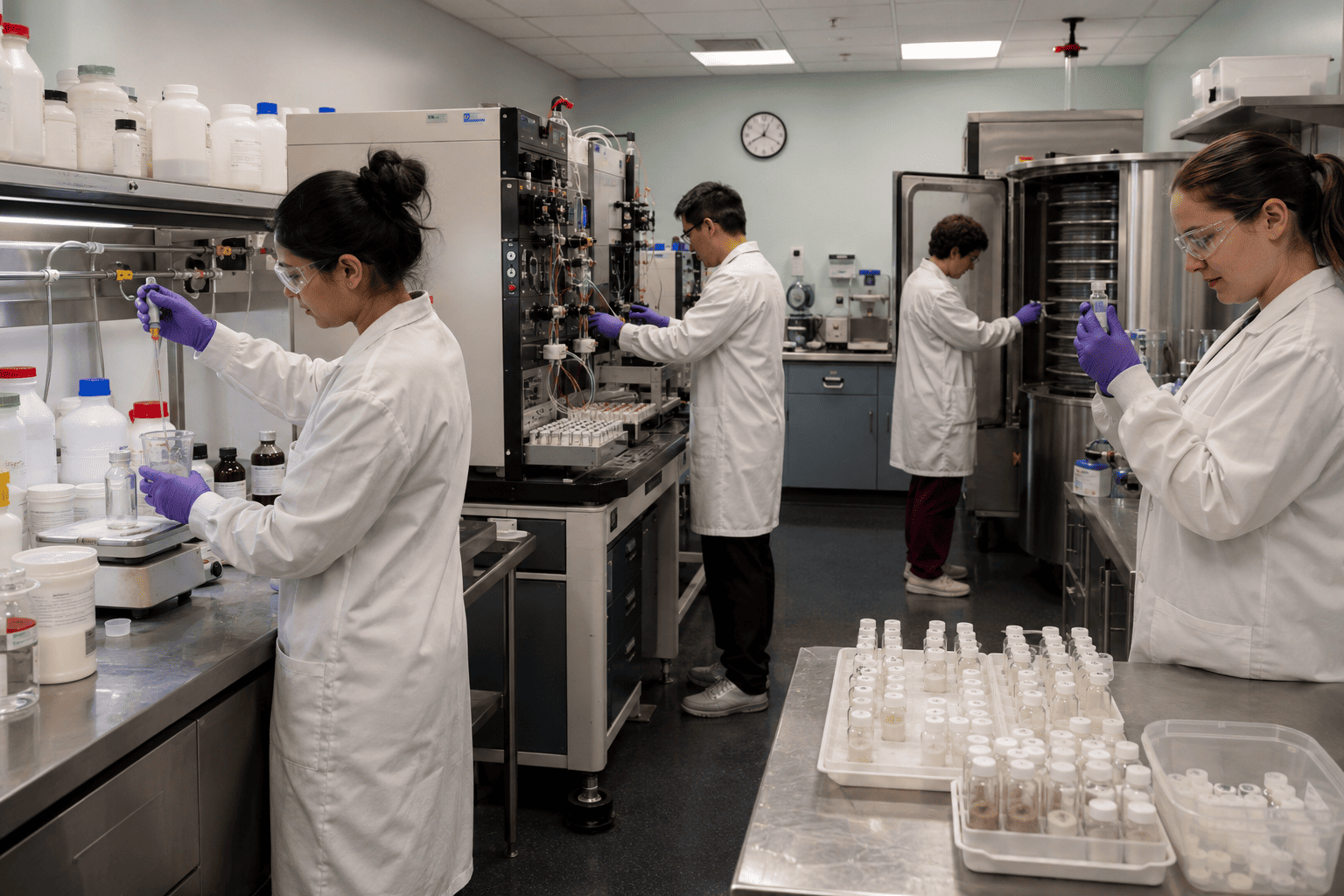
I work from the production side, so I see timelines differently from a buyer reading a price list. The synthesis step matters, but it is only one part of the full delivery path. Below, I will break down what really affects timing and how I prefer buyers to request an accurate estimate.
What Does Custom Peptide Synthesis Time Include?
Custom peptide synthesis time is often misunderstood because many buyers picture only the chemical assembly step. That creates a planning problem. If purification, lyophilization, QC, and paperwork are not considered, the expected delivery date can become unrealistic before the order even starts.
Custom peptide synthesis time usually includes specification confirmation, raw material preparation, peptide assembly, cleavage, purification, lyophilization, quality control testing, documentation, final review, and shipment preparation.2 The actual calendar depends on the sequence, target purity, quantity, modifications, analytical requirements, and how clearly the buyer defines the order before production.
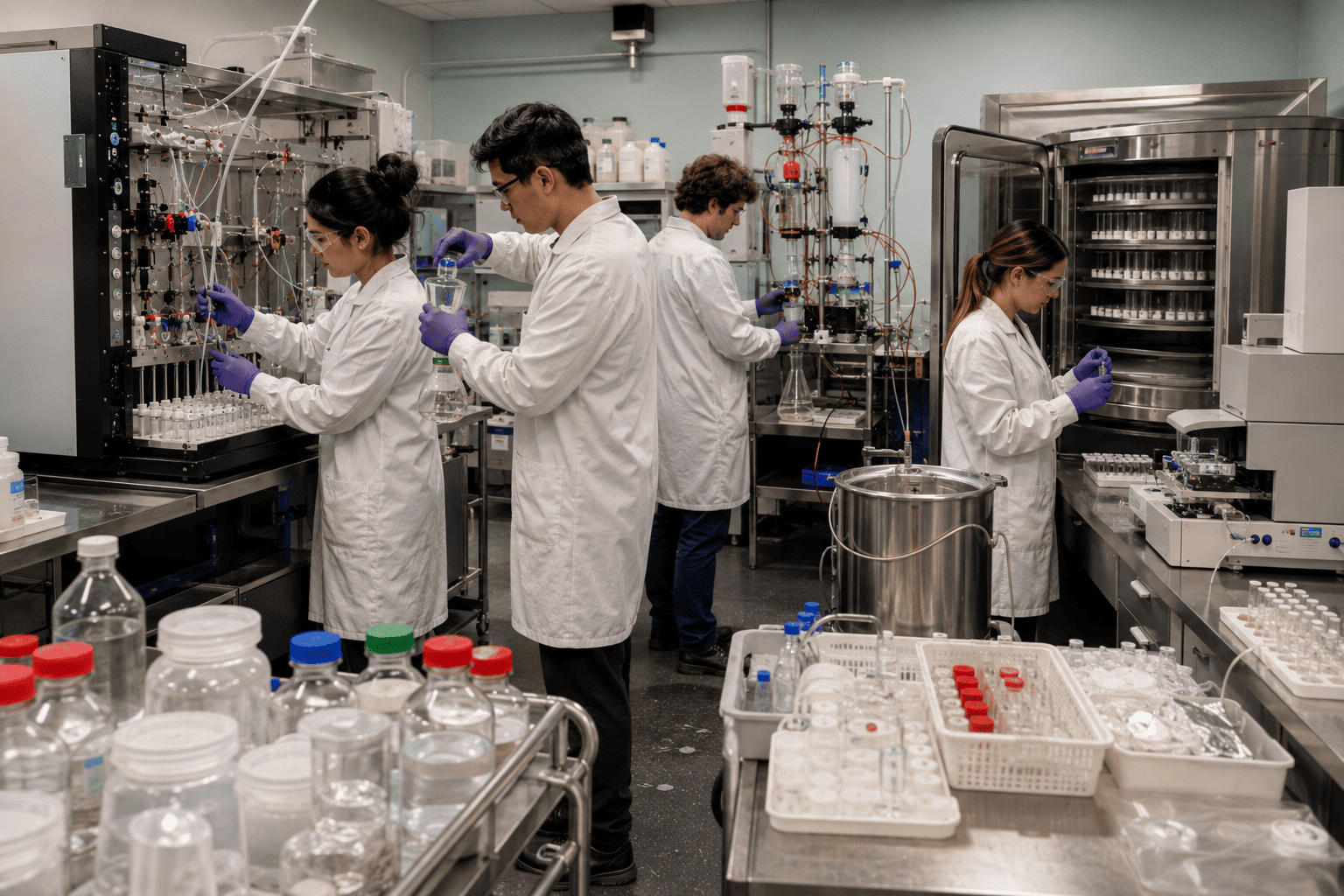
The timeline starts before synthesis begins
In typical custom peptide projects, I do not treat “day one” as the moment a buyer sends a sequence in an email. I treat day one as the point when the production specification is clear enough to proceed.
That difference matters.
A complete specification allows my team to check feasibility, estimate resin and reagent needs, review purification burden, and confirm whether the project looks simple, customary, or complex. An incomplete request may look fast at first, but it often creates extra back-and-forth.
A professional quote normally needs these details:
- Peptide sequence
- Sequence length
- Target purity
- Required quantity
- Modification details
- Salt form preference
- Intended use
- Analytical documents needed
- Packaging requirements
- Destination country
When one or more of these items is missing, the quotation can slow down. More importantly, the delivery estimate may not be reliable.
The main production stages
I like to explain the process in plain language because many procurement teams are not chemists. A typical project moves through several practical steps.
| Stage | What happens | Why it affects timing |
|---|---|---|
| Specification review | The sequence and order requirements are checked | Missing or unclear details delay confirmation |
| Synthesis | The peptide chain is assembled | Difficult sequences may require more optimization |
| Cleavage and crude handling | The peptide is removed and prepared for purification | Some peptides produce more impurities |
| Purification | The target peptide is separated from impurities | Higher purity often means more work3 |
| Lyophilization | The purified peptide is freeze-dried | Quantity and solvent load can change drying time |
| QC testing | Identity and purity are confirmed | Retesting may be needed if results need review |
| Documentation | COA and analytical files are prepared | Buyer-specific document requests add time |
| Final confirmation | Order is checked before dispatch | Packaging and shipping details must be correct |
Synthesis is not the only bottleneck
The synthesis step may be smooth, but purification can still take time. In my experience, this is one of the biggest misunderstandings in custom peptide synthesis planning. A peptide can be assembled successfully and still require careful purification to reach the requested specification.
For example, a buyer may request a high-purity peptide for research comparison work. The synthesis may not be the longest step. The purification and QC confirmation may control the schedule instead. If the peptide has close impurities or difficult separation behavior, the team may need additional purification runs.
Lyophilization also matters.4 It sounds like a simple final drying step, but it is part of quality and handling. A larger quantity, special salt form, or special packaging format can extend the time needed before the peptide is ready to ship.
> I usually tell buyers that a reliable timeline should cover the full path from confirmed specification to ready-to-ship material, not only the synthesis reaction.
That is why any serious answer to “How long does custom peptide synthesis take?” must include the full workflow.
Why Can’t Custom Peptide Synthesis Be Estimated From Peptide Length Alone?
Custom peptide synthesis is not predictable from length alone because two peptides with the same number of amino acids can behave very differently. Buyers often ask for a timeline based only on “15 amino acids” or “30 amino acids,” but that can hide real production risk.
Peptide length is only one timing factor.5 Sequence difficulty, hydrophobicity, aggregation tendency, target purity, order quantity, modifications, labels, salt form, and special packaging can all change the production schedule. A short modified peptide can take longer than a longer simple peptide if purification or QC is more demanding.
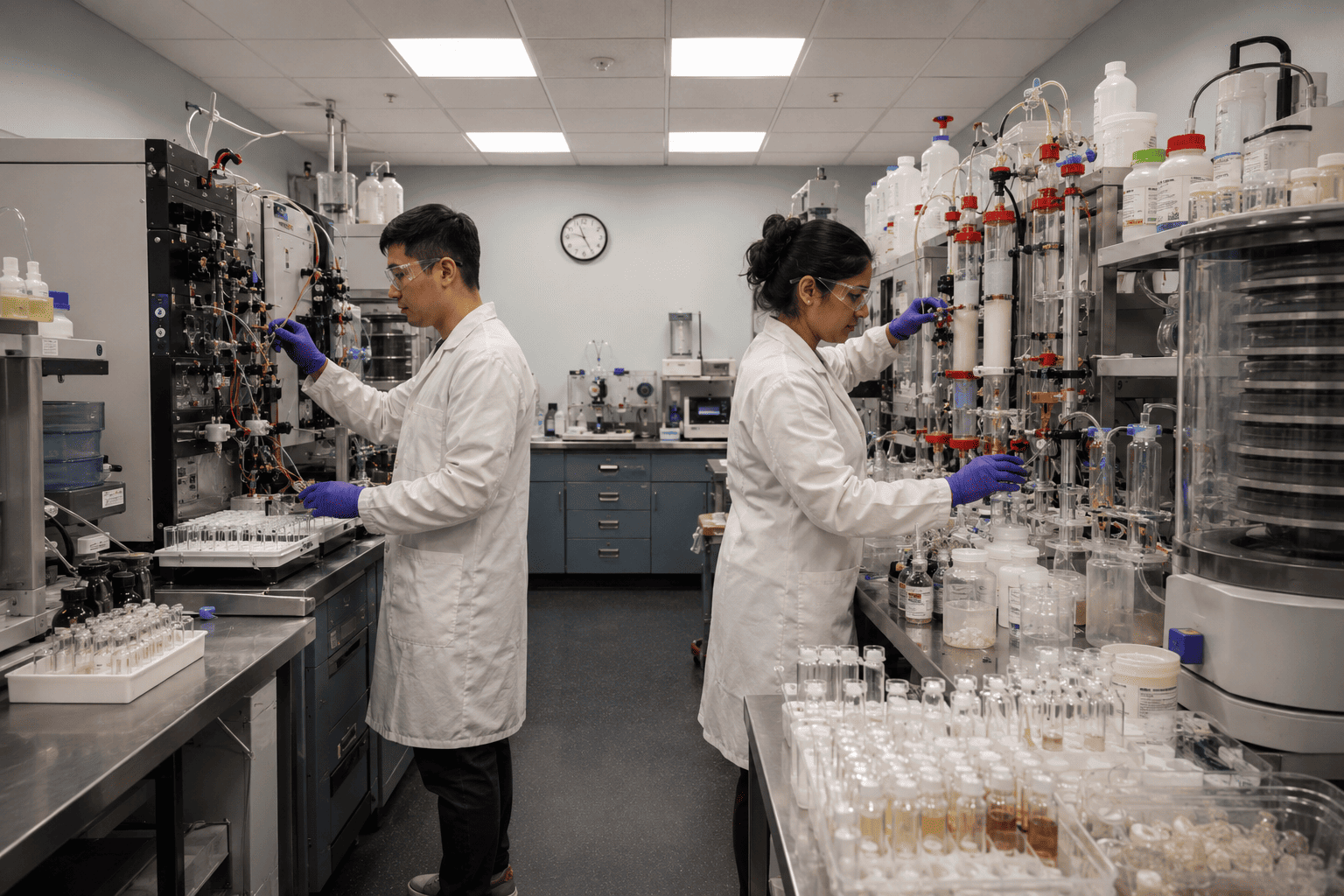
The same length does not mean the same workload
I have seen many buyers assume that a shorter sequence should always be faster. That idea sounds logical, but production does not always follow that logic. A short peptide with a difficult modification may require more care than a longer peptide with straightforward chemistry.
In custom peptide synthesis, the sequence itself matters. Some sequences are easier to assemble and purify. Others create side products, poor solubility, aggregation, or difficult separation patterns. These issues affect the schedule even when the peptide is not very long.
Common timing factors include:
-
Amino acid composition Some residues and sequence patterns are more difficult to handle.
-
Hydrophobicity Hydrophobic peptides can be harder to dissolve, purify, and process.6
-
Aggregation tendency Some sequences behave poorly during synthesis or purification.7
-
Target purity A request for higher purity usually means more purification effort.
-
Final quantity Larger quantities can require scale-up planning and more drying time.8
-
Modifications and labels Fluorescent labels, lipidation, cyclization, biotinylation, PEGylation, or terminal modifications may add steps.9
-
Salt form TFA, acetate, hydrochloride, or other salt forms may affect processing and documentation.10
-
Packaging Aliquoting into small vials can add handling time.
A simple way to classify timing risk
Instead of guessing from length, I prefer to classify projects by overall difficulty after sequence review. The exact reference ranges should be inserted only after internal approval, but the structure below is practical.
| Project type | Typical characteristics | Timeline style |
|---|---|---|
| Simple peptide | Straightforward sequence, no unusual modification, standard purity and quantity | Use approved reference range: [insert range] |
| Customary peptide | Moderate length, common modification, standard QC, normal purification workload | Use approved reference range: [insert range] |
| Complex peptide | Difficult sequence, high purity, special label, large quantity, or special handling | Use approved reference range: [insert range] |
This framework helps buyers understand why I avoid a universal promise. I would rather give a careful estimate after review than promise a date that ignores production reality.
Purity can change the schedule more than buyers expect
Target purity is one of the most important timeline variables.11 A lower-purity research screening peptide may be faster to prepare than a high-purity peptide that requires tighter separation. The difference is not only analytical. It is practical.
Higher purity can mean:
- More method development
- More purification fractions
- More QC checks
- More review before release
- More chance of yield loss during purification
Quantity also interacts with purity. A small high-purity quantity may be manageable. A larger high-purity quantity can require more production planning because purification capacity and lyophilization load become more important.
This is why I always ask for both quantity and purity. If a buyer gives only the sequence, the timeline remains incomplete.
How Should I Compare Custom Peptide Synthesis Lead Times Between Suppliers?
Custom peptide synthesis lead times should be compared by reliability, not by the shortest advertised number. A very fast promise can look attractive, but it may ignore sequence review, purification risk, QC workload, document preparation, or shipping realities. That creates hidden delay risk.
The best supplier timeline is the one given after specification review. Buyers should compare whether each supplier asks the right questions, explains assumptions, separates production time from shipping time, and confirms purification, QC, lyophilization, documentation, and packaging requirements before committing to a lead time.
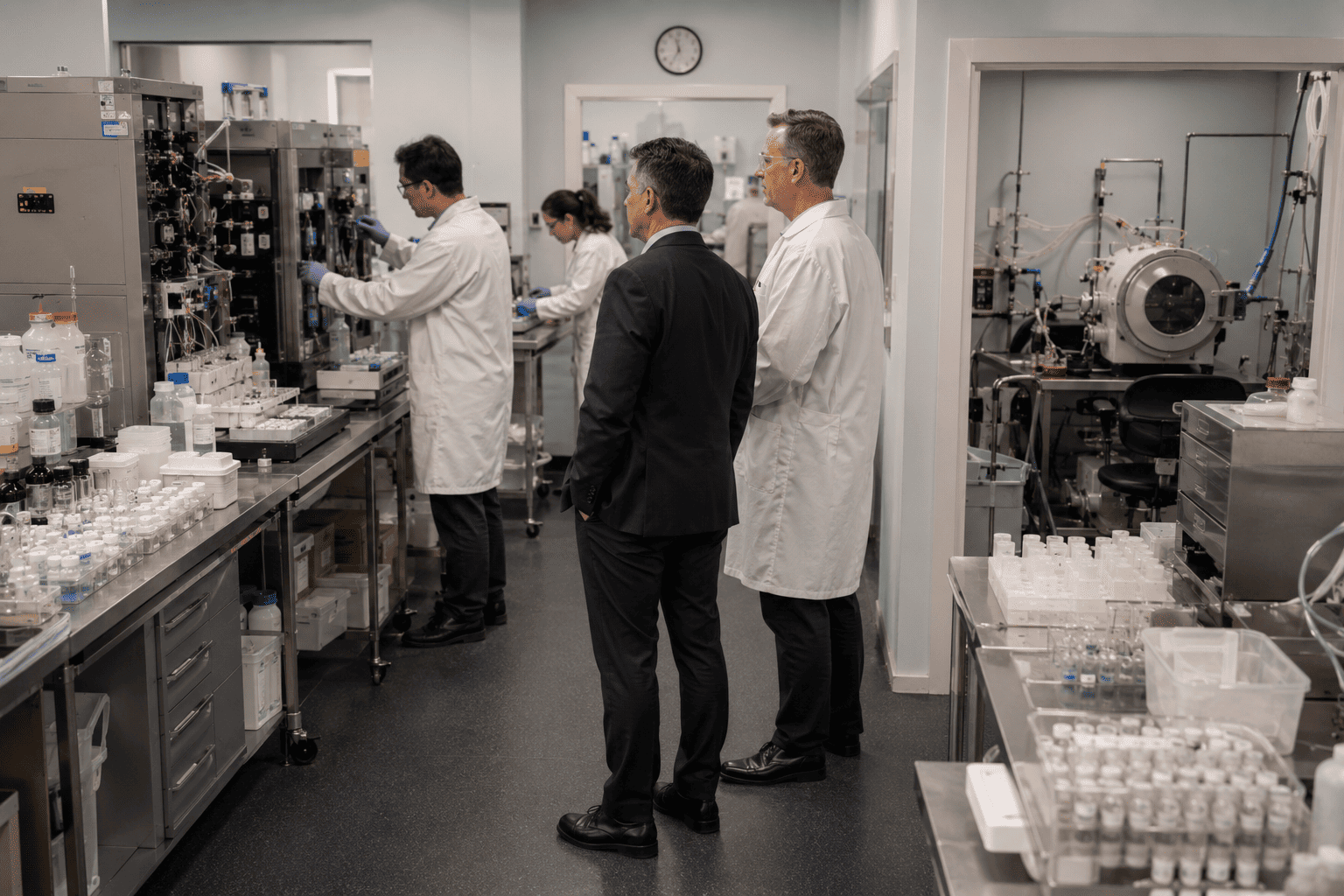
Fastest is not always safest
I understand why buyers ask for the fastest possible date. Experiments have schedules. Procurement teams have internal deadlines. Retailers need inventory planning. However, in custom peptide synthesis, the fastest estimate is not always the most useful estimate.
A timeline should answer this question:
> “Can this supplier deliver my exact peptide specification with a realistic risk assessment?”
That question is better than:
> “Who can say the smallest number of days?”
A supplier that promises a universal fastest time may not be considering the full project. A supplier that asks for the sequence, purity, quantity, and modifications before confirming the timeline may look slower at first, but the estimate is usually more useful.
What I look for in a reliable timeline
When I review a peptide inquiry, I try to separate assumptions from confirmed facts. This helps both sides avoid confusion. I believe buyers should expect the same from any professional supplier.
A reliable lead time estimate should clarify:
- Whether the time starts after order confirmation or after payment
- Whether the time includes QC and COA preparation
- Whether lyophilization is included
- Whether document review is included
- Whether aliquoting or special packaging is included
- Whether shipping time is separate
- Whether customs clearance risk is excluded
- Whether the estimate is based on sequence review
These details help buyers compare suppliers fairly.
Supplier comparison table
| Question to ask | Weak answer | Strong answer |
|---|---|---|
| When does the timeline start? | “Immediately” | “After specification and order confirmation” |
| Does the estimate include QC? | “Usually” | “Yes, including identity and purity testing as agreed” |
| Is purification included? | “Of course” | “Yes, based on target purity and expected purification workload” |
| Are modifications reviewed? | “No problem” | “We need to confirm the exact modification and position” |
| Is shipping included? | “Fast delivery” | “Production lead time and shipping time are listed separately” |
| What if the sequence is difficult? | “Still same time” | “Timeline may change after sequence review” |
Buyers should separate production lead time from delivery time
The word “delivery” can create confusion. Some buyers use it to mean production completion. Others use it to mean arrival at their facility. These are not the same.
In practical terms, the total calendar includes:
- Inquiry review time
- Quotation confirmation
- Purchase order or payment process
- Production
- Purification
- Lyophilization
- QC and documentation
- Final release
- International shipping
- Customs clearance
- Local delivery
As a peptide lab and factory based in Xiamen, I pay close attention to export shipment planning. We commonly support buyers in Europe, North America, Australia, and New Zealand, so I know that shipping documents and destination requirements matter. However, shipping time should still be discussed separately from the production lead time.
That separation helps procurement teams plan more accurately. It also prevents misunderstanding when a production order is completed on time but international logistics adds extra days.
What Information Helps Confirm Custom Peptide Synthesis Time Faster?
Custom peptide synthesis time can be confirmed faster when the buyer sends a complete and clear specification at the first inquiry. Missing details cause delays because the supplier must ask follow-up questions before giving a responsible price and timeline.
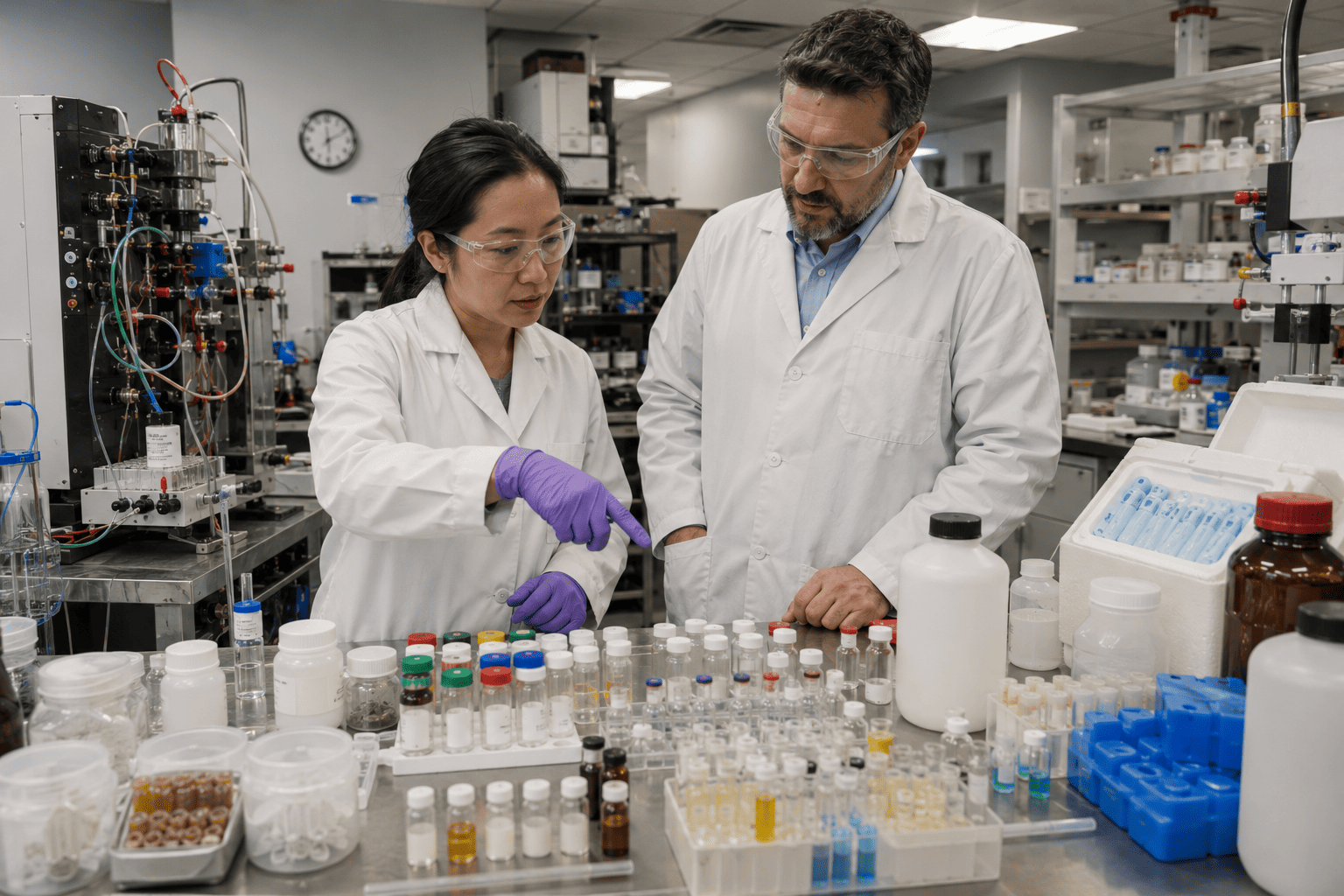
A complete inquiry should include the peptide sequence, length, target purity, quantity, intended use, modifications, labels, salt form, special packaging, documentation needs, and destination country. This information allows the supplier to review production difficulty and give a more realistic lead time after sequence evaluation.
The best inquiry checklist
I always appreciate a buyer who sends a complete request. It helps my team respond faster, and it reduces the chance of timeline changes later. It also helps the buyer compare multiple suppliers on the same basis.
Here is the checklist I recommend:
- Peptide name or project code
- Full peptide sequence
- N-terminal and C-terminal requirements
- Sequence length
- Target purity
- Required quantity
- Intended use
- Modification type and position
- Label type and position
- Preferred salt form
- Solubility or handling requirements
- Aliquoting or vial size
- Special packaging
- Required QC documents
- Shipping destination
- Target receiving date, if any
If the buyer does not know some details, that is acceptable. I would rather know what is undecided than assume incorrectly.
Why intended use matters
Intended use helps the supplier understand the practical expectation. A peptide for early research screening may have different requirements from a peptide used for product development, formulation testing, analytical method development, or retail product planning.
I do not treat intended use as a medical or regulatory judgment. Instead, I use it to understand the specification level. For example, a buyer may need extra documentation, tighter purity, special packaging, or batch consistency planning. Those choices can affect the timeline.
Specification gaps that commonly slow quotation
Some missing details cause more delay than others. These are the gaps I see most often:
| Missing detail | Why it slows the estimate |
|---|---|
| Target purity | Purification workload cannot be estimated well |
| Quantity | Scale and drying workload remain unclear |
| Modification position | Production route may change |
| Salt form | Final processing and documentation may change |
| Packaging | Aliquoting can add handling time |
| Destination | Shipping and document planning remain incomplete |
| QC documents | Testing and reporting workload may differ |
A buyer may ask, “Can you quote first and we decide later?” Sometimes that is possible for a rough reference. However, the timeline cannot be treated as final until the core specification is confirmed.
A practical inquiry template
Buyers can copy this format when contacting a supplier:
> Hello, > I would like a quotation and lead time estimate for a custom peptide. > Sequence: [insert sequence] > Quantity: [insert quantity] > Purity: [insert purity] > N-terminus/C-terminus: [insert details] > Modifications or labels: [insert details] > Salt form: [insert preference or “please advise”] > Intended use: [research / development / retail product planning / other] > Packaging: [bulk vial / aliquots / special request] > Required documents: [COA / HPLC / MS / other] > Destination country: [insert country] > Target receiving date: [insert date, if any]
This type of inquiry helps my team review the project faster. It also gives the buyer a clearer basis for comparing suppliers.
Frequently Asked Questions
Is peptide synthesis time the same as total delivery time?
No. Peptide synthesis time is only one part of total delivery time. The full timeline may include specification review, purification, lyophilization, QC testing, documentation, release checks, international shipping, customs clearance, and local delivery. Buyers should ask suppliers to separate production lead time from shipping time.
Can a short peptide still take a long time?
Yes. A short peptide can take longer if it has difficult sequence behavior, special modifications, high purity requirements, labels, special salt forms, or demanding packaging needs. Peptide length matters, but it does not control the timeline by itself.
Why does high purity increase the lead time?
High purity can increase the lead time because purification may require more method work, more fraction collection, more analytical checks, and more review. Some peptides are harder to separate from related impurities, so the purification and QC stages can become major timing factors.
What is the fastest way to get an accurate lead time?
The fastest way is to send a complete specification at the first inquiry. I recommend including the sequence, purity, quantity, modifications, salt form, packaging, intended use, required documents, and destination country. Complete details allow the supplier to review feasibility and timing more efficiently.
Should I choose the supplier with the shortest quoted timeline?
Not always. A short timeline is useful only if it is realistic for your exact peptide. I recommend choosing a supplier that reviews the sequence, explains assumptions, includes purification and QC in the estimate, and separates production time from shipping time.
Conclusion
Custom peptide synthesis does not have one fixed timeline for every project. A reliable estimate depends on the peptide sequence, purity, quantity, modifications, purification workload, lyophilization, QC, documentation, packaging, and specification clarity. I recommend treating lead time as a risk-based review, not a generic promise. If you want a realistic timeline for your peptide project, send us your sequence, target purity, quantity, intended use, modifications, salt form, packaging needs, and destination country so we can review the specification and respond clearly.
---"Peptide synthesis", https://en.wikipedia.org/wiki/Peptide_synthesis. General references on solid‑phase peptide synthesis describe the standard workflow—including chain assembly on resin, cleavage, chromatographic purification (often RP‑HPLC), lyophilization, and analytical confirmation—indicating that several stages beyond the coupling reaction influence overall timelines. Evidence role: general_support; source type: encyclopedia. Supports: That standard solid-phase peptide synthesis projects include steps such as chain assembly, cleavage, purification, lyophilization, and analytical characterization, each of which can impact total project duration.. Scope note: An encyclopedic source provides broad context rather than lab‑specific scheduling details. ↩
"Peptides Module I", https://cme.smhs.gwu.edu/a4m-mmi-/content/peptides-module-i-3. Academic course notes on peptide synthesis routinely outline resin‑based assembly followed by cleavage, purification, freeze‑drying, and analytical documentation, supporting the inclusion of these stages in the practical timeline for custom peptide production. Evidence role: general_support; source type: education. Supports: That typical SPPS practice includes resin loading/coupling, cleavage, purification, lyophilization, and QC documentation as standard parts of the peptide production workflow.. Scope note: Curricular materials corroborate technical stages but do not address company‑specific administrative steps. ↩
"HPLC Analysis and Purification of Peptides - PMC", https://pmc.ncbi.nlm.nih.gov/articles/PMC7119934/. Purification literature indicates that meeting stricter purity specifications often requires more method development, selective fraction collection, and analytical confirmation, increasing the workload relative to lower‑purity preparations. Evidence role: general_support; source type: paper. Supports: That higher purity specifications in peptide production commonly necessitate more extensive chromatographic purification and review than lower-purity targets.. Scope note: Sources discuss typical practice rather than fixed thresholds or universally applicable workloads. ↩
"Quality by Design: Scale-Up of Freeze-Drying Cycles in ...", https://www.academia.edu/21929934/Quality_by_Design_Scale_Up_of_Freeze_Drying_Cycles_in_Pharmaceutical_Industry. Educational materials on freeze‑drying explain that lyophilization cycle time arises from primary and secondary drying phases and is influenced by product load and formulation, supporting its role as a schedule‑affecting stage in production. Evidence role: mechanism; source type: education. Supports: That lyophilization involves primary and secondary drying steps whose duration depends on product load, composition, and process parameters.. Scope note: Educational references discuss principles but do not quantify cycle times for specific peptide batches. ↩
"Challenges and Perspectives in Chemical Synthesis of Highly ...", https://pmc.ncbi.nlm.nih.gov/articles/PMC7064641/. Reviews of solid‑phase peptide synthesis report that sequence‑dependent phenomena—such as hydrophobic segments and on‑resin aggregation—hinder coupling efficiency and downstream purification, indicating that production difficulty is driven by sequence properties rather than length alone. Evidence role: mechanism; source type: paper. Supports: That sequence characteristics (e.g., hydrophobic segments, propensity to aggregate, difficult motifs) can impede SPPS and purification regardless of overall chain length.. Scope note: Mechanistic literature explains causes of difficulty but does not translate them into specific calendar durations. ↩
"Synthesis and Purification of Highly Hydrophobic Peptides ...", https://pmc.ncbi.nlm.nih.gov/articles/PMC2773559/. Analytical and synthesis reviews note that hydrophobic peptides often exhibit poor solubility and challenging chromatographic behavior, which complicates purification and handling relative to more polar sequences. Evidence role: mechanism; source type: paper. Supports: That peptide hydrophobicity reduces solubility and complicates chromatographic separation, increasing processing difficulty during synthesis and purification.. Scope note: The literature explains typical effects of hydrophobicity but may not predict the extent of difficulty for a specific sequence. ↩
"Backbone Protecting Groups for Enhanced Peptide and Protein ...", https://pmc.ncbi.nlm.nih.gov/articles/PMC12338413/. Methodological studies describe on‑resin aggregation and sequence‑dependent side reactions during SPPS, documenting how these behaviors impair coupling and necessitate additional measures in purification. Evidence role: mechanism; source type: research. Supports: That peptide sequences can aggregate on resin or generate side products that reduce coupling efficiency and complicate purification.. Scope note: Evidence is sequence‑specific and provides mechanistic insight rather than a generalized timeline impact. ↩
"Quality by Design: Scale-Up of Freeze-Drying Cycles in ... - PMC", https://pmc.ncbi.nlm.nih.gov/articles/PMC3755168/. Institutional technical guidance on freeze‑drying indicates that batch load affects heat and mass transfer during primary and secondary drying, so larger quantities typically necessitate adjusted cycles and longer drying times. Evidence role: mechanism; source type: institution. Supports: That lyophilization cycle duration is influenced by batch load, and larger loads can extend drying times, requiring scale-up planning.. Scope note: Institutional guidance explains principles; exact time increases depend on equipment and formulation. ↩
"Fluorescence Labeling of Peptides: Finding the Optimal ... - PMC", https://pmc.ncbi.nlm.nih.gov/articles/PMC11450724/. Method reviews on peptide modification describe that cyclization, conjugation (e.g., biotin, PEG), and fluorescent labeling introduce extra reaction steps and purification demands beyond linear peptide synthesis. Evidence role: general_support; source type: research. Supports: That modifications such as cyclization, biotinylation, PEGylation, and fluorescent labeling entail additional synthetic steps and purification considerations.. Scope note: Complexity varies by specific modification and may not uniformly affect time across all sequences. ↩
"Towards a Consensus for the Analysis and Exchange of TFA ...", https://pmc.ncbi.nlm.nih.gov/articles/PMC12389442/. Analytical and process reports note that synthetic peptides often retain trifluoroacetate counterions from purification, and that conversion to other salt forms requires further treatment and verification, which can add processing steps. Evidence role: mechanism; source type: paper. Supports: That peptides commonly carry counterions such as trifluoroacetate from RP-HPLC, and that exchanging to alternative salts (e.g., acetate or hydrochloride) involves additional processing.. Scope note: Evidence supports the need for processing but does not address specific documentation practices across suppliers. ↩
"HPLC Analysis and Purification of Peptides - PMC", https://pmc.ncbi.nlm.nih.gov/articles/PMC7119934/. Expert reviews in peptide purification note that meeting higher purity specifications typically requires additional chromatographic optimization, more selective fraction collection, and expanded QC verification, and may reduce yield relative to lower-purity targets. Evidence role: expert_consensus; source type: paper. Supports: That achieving high-purity peptide material generally entails more extensive chromatographic optimization, fraction selection, and analytical checks, often with yield trade-offs.. Scope note: Consensus statements support typical effects; specific time impacts depend on sequence and facility capacity. ↩