Skip to content
<pre><code class="language-markdown"># Why Difficult Peptides Require an Expert Supplier?
Difficult peptides can look simple on paper, but they often become risky once synthesis, purification, solubility, and delivery timelines collide. I have seen buyers treat them like ordinary sequence-based orders, only to face delays or unstable expectations. The safer path is to choose a supplier who evaluates risk before promising price, purity, or speed.
Difficult peptides require an expert supplier because they are not just “harder peptides”; they are higher-risk custom projects. Long sequences, hydrophobic regions, aggregation, low solubility, and purification challenges can affect yield, purity, timeline, and communication.1 An expert supplier identifies these risks early and manages the project with realistic expectations.

Many peptide projects fail in the planning stage, not the production stage. A strong supplier will not only ask, “What is the sequence?” They will ask what the peptide must support, what documents are needed, and where the technical uncertainty may appear.
What Makes Difficult Peptides Different From Standard Peptides?
A standard peptide order can feel predictable, but difficult peptides create more uncertainty from the first review. The problem is that many buyers only compare quotes. That can hide real synthesis and purification risks. I prefer to define difficulty by project risk, not by a dramatic product name.
Difficult peptides are different because their sequence properties can reduce synthesis efficiency, complicate cleavage and purification, lower solubility, and make delivery less predictable. Common risk factors include long chain length, strong hydrophobicity, repeated residues, oxidation-sensitive residues, poor ionization, aggregation, and strict purity or documentation requirements.
Difficulty Starts With the Sequence
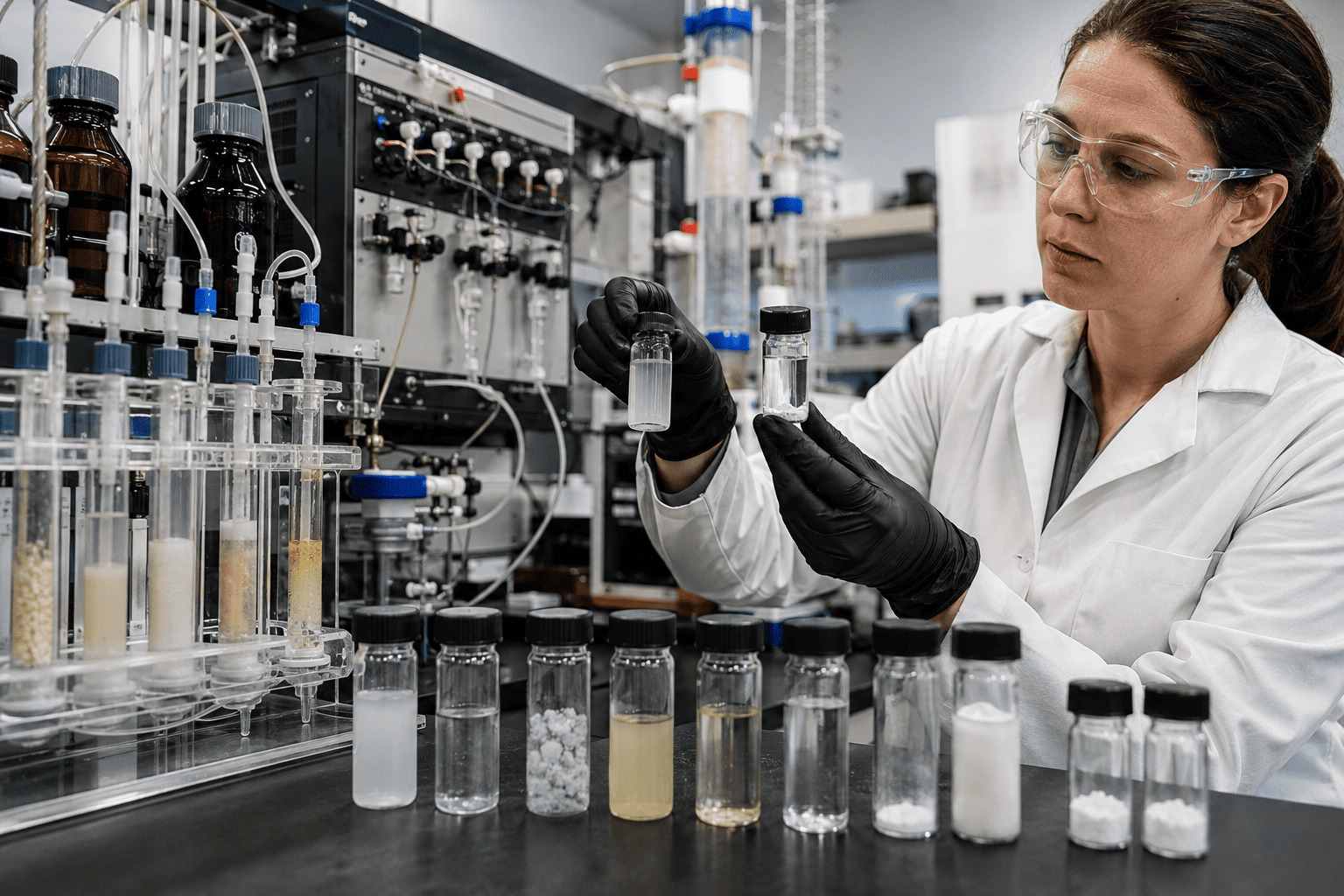
In custom peptide production, the sequence is more than a string of amino acids. It is the project map. When I review a new request, I look for practical risk signals before I think about a final quote.
Common sequence-related challenges include:
- Long peptide chains, especially when coupling efficiency drops over many cycles2.
- Hydrophobic stretches, which may cause aggregation during synthesis or purification.
- Repeated residues, which can make by-products harder to separate.
- Cysteine-containing sequences, which may require careful oxidation or protection strategy.
- Modified peptides, such as labeled, acetylated, amidated, or conjugated sequences.
- Low-solubility peptides, which may be hard to dissolve after lyophilization.
A short peptide is not always easy, and a long peptide is not always impossible. However, longer and more hydrophobic sequences usually carry more uncertainty. I have seen non-public projects where the same target purity looked reasonable at first, but hydrophobicity changed the practical difficulty of purification.
Why Risk Increases During Production
Peptide synthesis involves repeated steps. Each step can introduce small losses or side products.3 When the sequence is easy, these issues may stay manageable. When the peptide is difficult, small problems can multiply.
| Risk Factor | Practical Impact | Why It Matters to Buyers |
|---|---|---|
| Long sequence | Lower crude purity may occur | More purification work may be needed |
| High hydrophobicity | Aggregation or poor solubility may occur | Final handling can become difficult |
| Similar impurities | Separation becomes harder | Target purity may be less predictable |
| Strict purity request | More purification cycles may be needed | Timeline and cost can increase |
| Special documents | Extra testing may be required | Delivery planning must be clear |
A good supplier should explain these points in buyer-friendly language. The goal is not to scare the customer. The goal is to prevent false certainty. When a researcher, retailer, or distributor understands the risk early, they can make better decisions about quantity, purity, format, testing, and lead time.
> Difficult peptide work is not only chemistry. It is also expectation management.
Why Are Cheap Quotes Risky for Difficult Peptides?
A low price can look attractive when budgets are tight. The problem is that difficult peptides often need extra planning, purification attempts, solubility evaluation, or communication. If a quote ignores those risks, the buyer may pay later through delays, repeated rework, or unclear batch outcomes.
Cheap quotes are risky for difficult peptides when they promise simple delivery without explaining uncertainty. The lowest price or highest stated purity is not always the safest option. A careful supplier should clarify possible synthesis, purification, solubility, documentation, and timeline risks before asking the buyer to approve the order.
The Problem With “Fast Quote, Big Promise”
I understand why buyers ask for quick pricing. Researchers may need to submit a grant budget. Retailers may need a resale estimate. Procurement teams may need three supplier quotes. Speed matters.
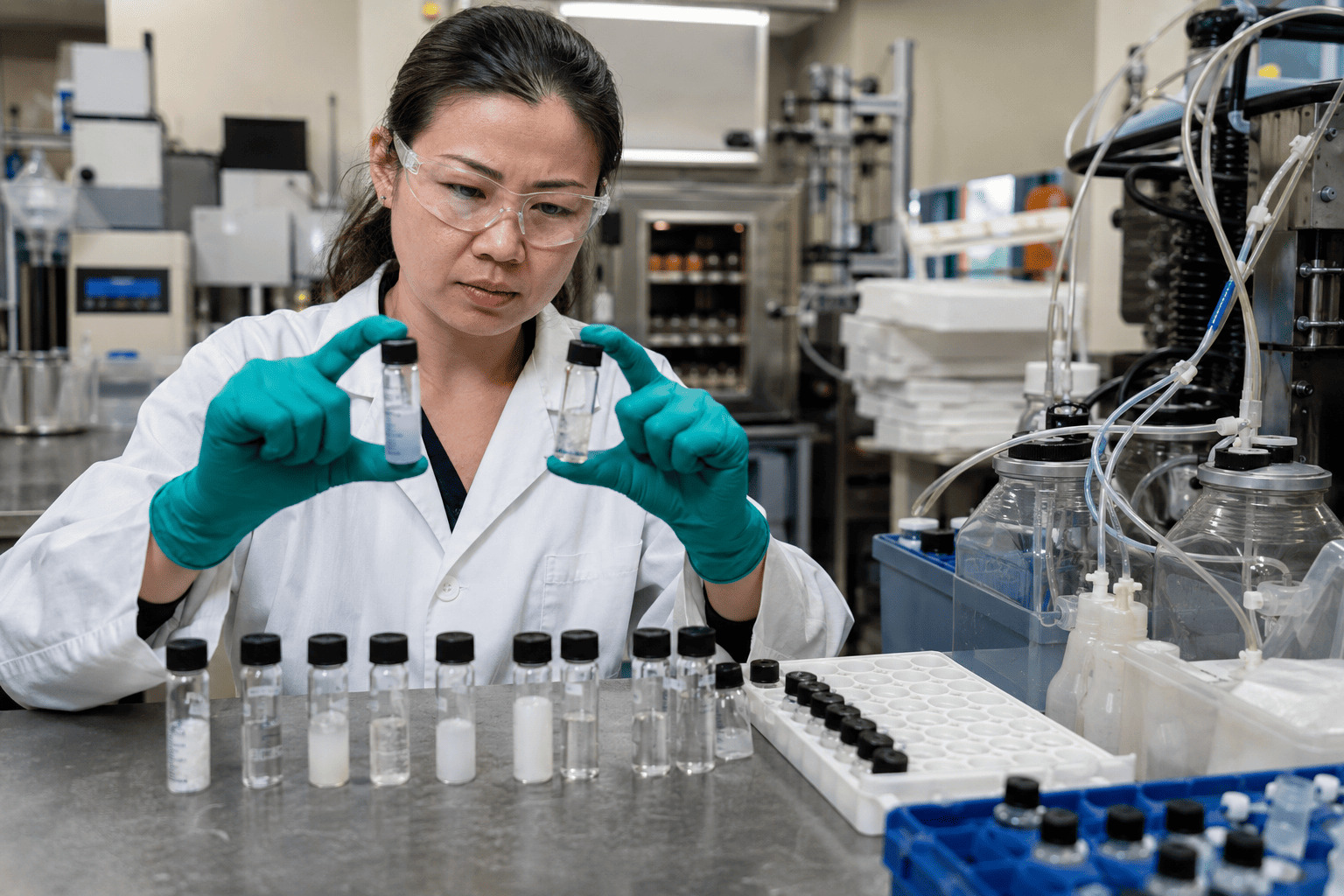
However, a fast quote can become dangerous when it skips technical review. If a supplier gives a very high purity promise for a complex sequence without asking follow-up questions, I see that as a warning sign.
A responsible supplier may ask:
- What is the full amino acid sequence?
- What is the target purity?
- What is the required quantity?
- Is the peptide for research, resale, formulation development, or another workflow?
- Are there special requirements for COA, HPLC, MS, TFA removal, acetate conversion, or other documents?
- Does the buyer need help with solubility guidance?
- Is there a strict deadline?
These questions are not delays. They protect the project.
Price and Purity Need Context
A high stated purity can sound reassuring. Yet purity depends on what is technically realistic for that peptide, what analytical method is used, and how difficult the impurities are to separate.4 For some difficult sequences, reaching a high target purity may require more purification work, more analytical checks, or a discussion about practical trade-offs.
Here is how I suggest buyers compare quotes:
| Quote Feature | Weak Signal | Strong Signal |
|---|---|---|
| Price | Lowest number with no explanation | Price linked to risk, quantity, and purity |
| Purity | “No problem” for every sequence | Realistic discussion of target purity |
| Timeline | Fixed promise for all peptides | Timeline range with risk notes |
| Communication | Only sales reply | Technical review before confirmation |
| Documents | Vague “all included” | Clear list of available documents |
| Solubility | Not discussed | Early warning if solubility may be poor |
A supplier does not need to be the most expensive to be good. But the supplier should show how they think. In difficult peptide projects, thinking is part of the service.
The Hidden Cost of Rework
The cheapest quote can become expensive if the project needs to restart. Buyers may lose time waiting for unclear updates. Retailers may miss a launch window. Researchers may need to adjust experimental schedules. Distributors may struggle to explain delays to downstream customers.
I do not believe every difficult peptide can be made quickly, cheaply, and at very high purity. That would be an irresponsible claim. I do believe a serious supplier should identify uncertainty early and communicate clearly when exceptions appear.
How Does an Expert Supplier Evaluate Difficult Peptides Before Production?
Many buyers think supplier evaluation starts after production begins. In my experience, it starts before the invoice. If the supplier does not review technical risk early, the buyer may approve a project based on incomplete information. That can create avoidable tension later.
An expert supplier evaluates difficult peptides by reviewing sequence length, hydrophobicity, modifications, solubility, target purity, quantity, intended workflow, analytical requirements, and delivery expectations. The supplier should identify possible synthesis and purification risks before production starts and should explain those risks in clear, practical language.

Step 1: Review the Full Sequence
The first technical review should focus on the peptide sequence. I look at the full chain, not only the number of amino acids. A 35-mer with balanced polarity may behave better than a shorter sequence with a highly hydrophobic block.
Important sequence questions include:
- Is the peptide long-chain?
- Does it contain strong hydrophobic regions?
- Does it contain multiple cysteines?
- Are there unusual amino acids or modifications?
- Are there repeated motifs that may create similar impurities?
- Does the peptide need a specific terminal modification?
This review helps the supplier avoid blind quoting.
Step 2: Match Purity to Use Case Without Judging Final Effects
The supplier should ask about intended use, but not to claim biological, cosmetic, clinical, or commercial outcomes. The purpose is to match production and documentation expectations.
For example:
| Buyer Type | Common Concern | Supplier Should Clarify |
|---|---|---|
| Researcher | Experimental consistency | Purity, MS, HPLC, storage notes |
| Scholar | Publication or method support | Analytical documentation |
| Retailer | Batch presentation | COA, labeling, packaging format |
| Distributor | Supply reliability | Lead time, repeat order risk |
| Procurement team | Vendor qualification | Documents and communication process |
A peptide supplier can support the material side of the project. The buyer remains responsible for the final application design, biological interpretation, product claims, or commercial use.
Step 3: Assess Solubility and Handling Risk
Solubility is a frequent source of frustration. Some difficult peptides may be technically delivered but hard for the buyer to dissolve. Hydrophobic peptides may need special solvent screening, buffer adjustment, or careful handling.5 A supplier should not ignore this issue.
Practical solubility signals include:
- Long hydrophobic stretches.
- Many nonpolar amino acids.
- Low charged residue content.6
- Aggregation-prone motifs.
- Poor behavior during purification.
A clear supplier may provide general handling guidance or flag that solubility may be limited. This does not guarantee performance in the buyer’s system, but it helps the buyer plan.
Step 4: Communicate Risk Before Confirmation
The most important sign is not whether the supplier says “yes.” It is how the supplier says “yes.”
A good pre-production response may include:
- A realistic lead time range.
- Notes about expected synthesis or purification difficulty.
- Confirmation of target purity and analytical method.
- Discussion of possible salt form or counterion needs.
- Questions about packaging, storage, and documentation.
- A warning if the requested specification may be difficult.
In my own work with custom peptide buyers, the best projects usually start with clear questions. The slowest projects often start with vague assumptions.
What Communication Should Buyers Expect During a Difficult Peptide Project?
Difficult peptide projects can change during production. That does not always mean the supplier failed. The real issue is whether the supplier communicates exceptions early. Silence creates anxiety, especially for researchers, retailers, and distributors who depend on predictable schedules.
Buyers should expect clear communication about project status, synthesis progress, purification challenges, analytical results, solubility concerns, document preparation, and delivery timing. For difficult peptides, a strong supplier should explain exceptions quickly, offer practical options, and avoid hiding uncertainty until the promised shipping date has passed.

Why Updates Matter More for Difficult Projects
For a routine peptide, the buyer may only need order confirmation, test data, and shipping details. For difficult peptides, that is often not enough. If purification becomes harder than expected, the buyer needs to know before the deadline is at risk.
Useful updates may include:
- The project has entered synthesis.
- Crude analysis suggests purification may be challenging.
- Target purity may require additional purification.7
- Solubility concerns appeared during handling.
- Analytical data is being confirmed.
- Documents are being prepared.
- Shipping schedule may change.
These updates help the buyer protect their own workflow. A researcher may adjust experiment timing. A distributor may update a downstream customer. A retailer may revise an inventory plan.
Good Communication Is Specific, Not Dramatic
A supplier does not need to send long technical essays. In fact, too much unexplained technical detail can confuse buyers. The best updates are short, specific, and decision-oriented.
Compare these two messages:
| Poor Update | Better Update |
|---|---|
| “Production is delayed.” | “Purification is taking longer because the crude profile contains close impurities. We are running an additional purification step and will update the HPLC result before confirming shipment.” |
| “Peptide is difficult.” | “The sequence shows strong hydrophobic behavior, so solubility may be limited. We recommend testing small-scale dissolution first.” |
| “We will ship soon.” | “QC is complete. COA, HPLC, and MS8 are being prepared. Estimated dispatch is within the next shipping cycle.” |
The better message gives the buyer something to act on.
What Buyers Should Ask Before Ordering
Buyers can reduce risk by asking direct questions before they approve the order:
- Have you reviewed the full sequence for synthesis risk?
- Do you see hydrophobicity or solubility concerns?
- Is the requested purity realistic for this sequence?
- What documents will be provided?
- How will you communicate if purification is more difficult than expected?
- Can you provide a lead time range instead of a fixed promise?
- What information do you need from me before production starts?
These questions help separate serious suppliers from simple quote vendors.
I have learned that difficult peptide projects are smoother when the buyer and supplier treat communication as part of quality control. The final material matters, but the information around the material also matters.
How Can Buyers Choose the Right Supplier for Difficult Peptides?
Choosing a supplier can feel stressful when the sequence is complex and the deadline matters. The wrong choice can create hidden delays, unclear data, or repeated clarification. The right choice gives the buyer a technical partner who sees risk early and communicates honestly.
Buyers should choose a supplier for difficult peptides by checking technical review quality, sequence-risk awareness, realistic purity discussion, documentation clarity, communication habits, and experience with custom peptide production. The best supplier is not always the fastest quote; it is the one that protects project reliability before and during production.

A Practical Supplier Checklist
When I advise new buyers, I suggest a simple scoring method. It is not perfect, but it makes supplier comparison more objective.
| Evaluation Point | What to Look For | Why It Matters |
|---|---|---|
| Sequence review | Supplier asks for full sequence and modifications | Prevents blind quoting |
| Risk comments | Supplier mentions length, hydrophobicity, or solubility | Shows technical thinking |
| Purity discussion | Supplier explains feasibility | Reduces unrealistic expectations |
| Documentation | Supplier lists COA, HPLC, MS, or other files clearly | Supports research and procurement |
| Communication plan | Supplier explains how updates are handled | Reduces uncertainty |
| Export experience | Supplier understands international shipping documents | Helps global buyers |
| Custom production setup | Supplier can manage non-standard requests | Supports complex projects |
For buyers in Europe, North America, Australia, and New Zealand, export experience also matters. International orders need more than synthesis.9 They may involve shipping documents, customs clarity, packaging expectations, and responsive communication across time zones.
Red Flags to Watch
Some warning signs are easy to miss during price comparison. I pay close attention to these:
- The supplier promises very high purity for every sequence10 without review.
- The quote does not mention sequence difficulty.
- The supplier avoids questions about documents.
- The supplier gives a fixed timeline but no risk explanation.
- The supplier cannot explain how they handle production exceptions.
- The supplier focuses only on price.
- The supplier treats a difficult custom peptide like a stock item.
A difficult peptide should be treated as a custom project. The supplier should make that clear from the beginning.
What a Strong Supplier Relationship Looks Like
A strong supplier does not need to overpromise. In fact, the best sign is often careful language. I trust suppliers and production teams more when they say:
- “This sequence may be challenging because…”
- “The target purity is possible to attempt, but we should evaluate after crude analysis.”
- “Solubility may need attention.”
- “We can provide these documents.”
- “If purification becomes difficult, we will update you before shipment.”
This kind of communication protects both sides. It helps the buyer plan, and it helps the supplier avoid unrealistic commitments.
As a peptide laboratory and factory in Xiamen, I have handled custom peptide requests where long-chain design and high hydrophobicity changed the practical production path. I do not use those examples as public case claims because sequences and customer details are confidential. But they have shaped how I think: difficult peptides need risk management first, quotation second.
Frequently Asked Questions
What is considered a difficult peptide?
A difficult peptide is usually a peptide with higher production risk due to long sequence length, strong hydrophobicity, aggregation, poor solubility, repeated residues, complex modifications, or challenging purification. The term describes practical synthesis and handling uncertainty, not just a “hard” product category.
Should I always choose the highest purity for difficult peptides?
No. The highest purity is not always the most practical choice. Buyers should match purity to the research, resale, or development workflow. For difficult sequences, very high purity may increase cost, timeline, and purification risk. A supplier should explain feasibility before confirming the specification.
Why does hydrophobicity make peptide production harder?
Hydrophobicity can cause aggregation during synthesis, purification, or dissolution. It can also make impurities harder to separate and final material harder to handle. A hydrophobic peptide may still be possible to produce, but the supplier should identify solubility and purification risks early.
What documents should I request from a custom peptide supplier?
Common documents include a Certificate of Analysis, HPLC chromatogram, mass spectrometry data, product label, and sometimes additional export or specification documents. Buyers should confirm document needs before ordering because documentation requirements can affect testing, review, and delivery planning.
Can an expert supplier guarantee that a difficult peptide will work in my application?
No. A peptide supplier can support synthesis, purification, analysis, documentation, and handling guidance. The buyer must evaluate final biological, cosmetic, clinical, commercial, or research performance within their own workflow. A responsible supplier should not promise final application effects.
Conclusion
Difficult peptides require more than a fast quote and an attractive purity number. They require early risk review, realistic technical communication, careful purification planning, solubility awareness, and clear documentation. I believe buyers should choose suppliers who ask better questions before production starts. If you need a custom peptide supplier for a complex sequence, share your full sequence, target purity, quantity, and document requirements with us, and we will help you evaluate the project risk before you commit.
</code></pre>
"Challenges and Perspectives in Chemical Synthesis of Highly ...", https://pmc.ncbi.nlm.nih.gov/articles/PMC7064641/. Peer-reviewed reviews of solid-phase peptide synthesis describe long, hydrophobic, and aggregation-prone sequences as common sources of reduced coupling efficiency, lower crude quality, and more difficult purification or handling; this supports the article’s risk framing, although it does not predict the outcome for any specific customer sequence. Evidence role: general_support; source type: paper. Supports: A peer-reviewed review or methods paper should support that long or hydrophobic peptide sequences and aggregation-prone behavior can reduce synthetic efficiency and complicate purification and solubility.. Scope note: The support is contextual because sequence-specific outcomes depend on the exact peptide, chemistry, scale, and purification method. ↩
"Bruce Merrifield and solid-phase peptide synthesis: a historical ...", https://pubmed.ncbi.nlm.nih.gov/18213693/. Literature on solid-phase peptide synthesis explains that peptides are assembled through repeated coupling and deprotection cycles, and that incomplete couplings or side reactions can accumulate across cycles, making longer chains more susceptible to reduced crude yield or purity. Evidence role: mechanism; source type: paper. Supports: A technical source should explain that SPPS uses repeated deprotection and coupling cycles, so incomplete reactions or losses can accumulate as peptide length increases.. ↩
"Total wash elimination for solid phase peptide synthesis - PMC - NIH", https://pmc.ncbi.nlm.nih.gov/articles/PMC10710472/. Reviews of solid-phase peptide synthesis note that incomplete coupling, deprotection inefficiencies, and side reactions can produce deletion sequences and related impurities, so small losses or side products may accumulate during multistep synthesis. Evidence role: mechanism; source type: paper. Supports: A technical review should show that SPPS can generate deletion sequences, incomplete products, and other side products at each synthetic cycle.. ↩
"HPLC Analysis and Purification of Peptides - PMC", https://pmc.ncbi.nlm.nih.gov/articles/PMC7119934/. Analytical-method guidance emphasizes that impurity and purity results depend on the specificity and resolving power of the method used; in peptide analysis, coeluting or structurally similar impurities can therefore affect how confidently a stated purity reflects the material composition. Evidence role: general_support; source type: institution. Supports: An analytical-method guideline or peptide analysis review should support that purity assessment depends on method specificity, chromatographic resolution, and impurity detection.. Scope note: This supports the analytical principle generally and does not define a universal purity threshold for difficult peptides. ↩
"Reverse-Phase High-Performance Liquid Chromatography of ...", https://deepblue.lib.umich.edu/bitstreams/9d663c6c-8464-4d55-820e-01a47bf5eefe/download. University and research-laboratory peptide handling guidance commonly notes that hydrophobic peptides can show poor aqueous solubility and may require preliminary dissolution trials using appropriate solvents, pH adjustment, or buffer selection. Evidence role: general_support; source type: education. Supports: A university or research-lab peptide handling guide should support that hydrophobic peptides can have limited aqueous solubility and may require solvent, pH, or buffer optimization.. Scope note: Such handling guidance is general and does not guarantee solubility in a particular biological or formulation system. ↩
"Aqueous solubility and membrane interactions of hydrophobic ...", https://pubmed.ncbi.nlm.nih.gov/15054891/. Studies and reviews on peptide solubility identify net charge and the presence of ionizable residues as important contributors to aqueous solubility, supporting the use of low charged-residue content as a warning sign for difficult dissolution. Evidence role: mechanism; source type: paper. Supports: A peptide solubility or peptide design paper should support that charged residues often improve aqueous solubility and that low net charge can contribute to poor solubility, especially in hydrophobic sequences.. Scope note: Charge is only one determinant of solubility; sequence context, pH, counterions, concentration, and aggregation behavior also matter. ↩
"HPLC Analysis and Purification of Peptides - PMC", https://pmc.ncbi.nlm.nih.gov/articles/PMC7119934/. Preparative peptide purification literature describes purity as dependent on chromatographic resolution and impurity profiles, and notes that higher purity targets may require additional purification or method optimization, often with yield and time trade-offs. Evidence role: general_support; source type: paper. Supports: A preparative peptide purification source should support that achieving higher purity can require additional chromatographic optimization or repeated purification, particularly when impurities are similar.. Scope note: The source would support the general purification trade-off rather than the exact number of purification cycles needed for a given sequence. ↩
"HPLC Analysis and Purification of Peptides - PMC", https://pmc.ncbi.nlm.nih.gov/articles/PMC7119934/. Peptide characterization literature identifies chromatographic analysis, commonly HPLC, as a standard approach for assessing peptide purity and mass spectrometry as a standard method for confirming molecular mass or identity, providing context for COA-linked HPLC and MS records. Evidence role: general_support; source type: paper. Supports: A peptide characterization review should support that HPLC is commonly used for peptide purity assessment and mass spectrometry for molecular mass or identity confirmation.. Scope note: The citation would support common analytical practice, not verify the contents or adequacy of any individual supplier’s certificate. ↩
"Common Export Documents", https://www.trade.gov/common-export-documents. Government customs guidance explains that international shipments require accurate documentation, commodity descriptions, valuation, and other customs information, supporting the article’s point that cross-border orders involve logistical requirements beyond manufacturing. Evidence role: general_support; source type: government. Supports: A government customs or export guidance source should support that international shipments require accurate documentation such as invoices, descriptions, customs information, and sometimes permits or special declarations.. Scope note: The exact requirements vary by country, material classification, value, carrier, and end use. ↩
"Challenges and Achievements of Peptide Synthesis in ... - PMC", https://pmc.ncbi.nlm.nih.gov/articles/PMC12135130/. Reviews of difficult peptide synthesis emphasize that synthesis and purification outcomes are sequence-dependent, with long, hydrophobic, aggregation-prone, or modified peptides often requiring special strategies and sometimes presenting limits to achievable purity. Evidence role: expert_consensus; source type: paper. Supports: A review should support the expert-consensus idea that peptide purity feasibility is sequence-dependent and that long, hydrophobic, aggregation-prone, or modified sequences can be difficult to purify to high purity.. Scope note: This supports skepticism toward universal purity guarantees but does not assess any specific supplier’s claim. ↩