Skip to content
Choosing a reliable custom peptide synthesis company can feel difficult when every supplier claims good quality, fast delivery, and competitive pricing. The risk grows when price looks attractive but technical details stay unclear. I have seen many buyers reduce that risk by focusing on communication, requirement confirmation, realistic timelines, and after-sales support.
A reliable custom peptide synthesis company helps you clarify peptide sequence risks, purity level, quantity, testing method, documentation, packaging, and delivery terms before quoting. The best choice is not always the cheapest or fastest supplier. It is the supplier that communicates clearly, explains uncertainty, confirms requirements, and supports you after delivery.
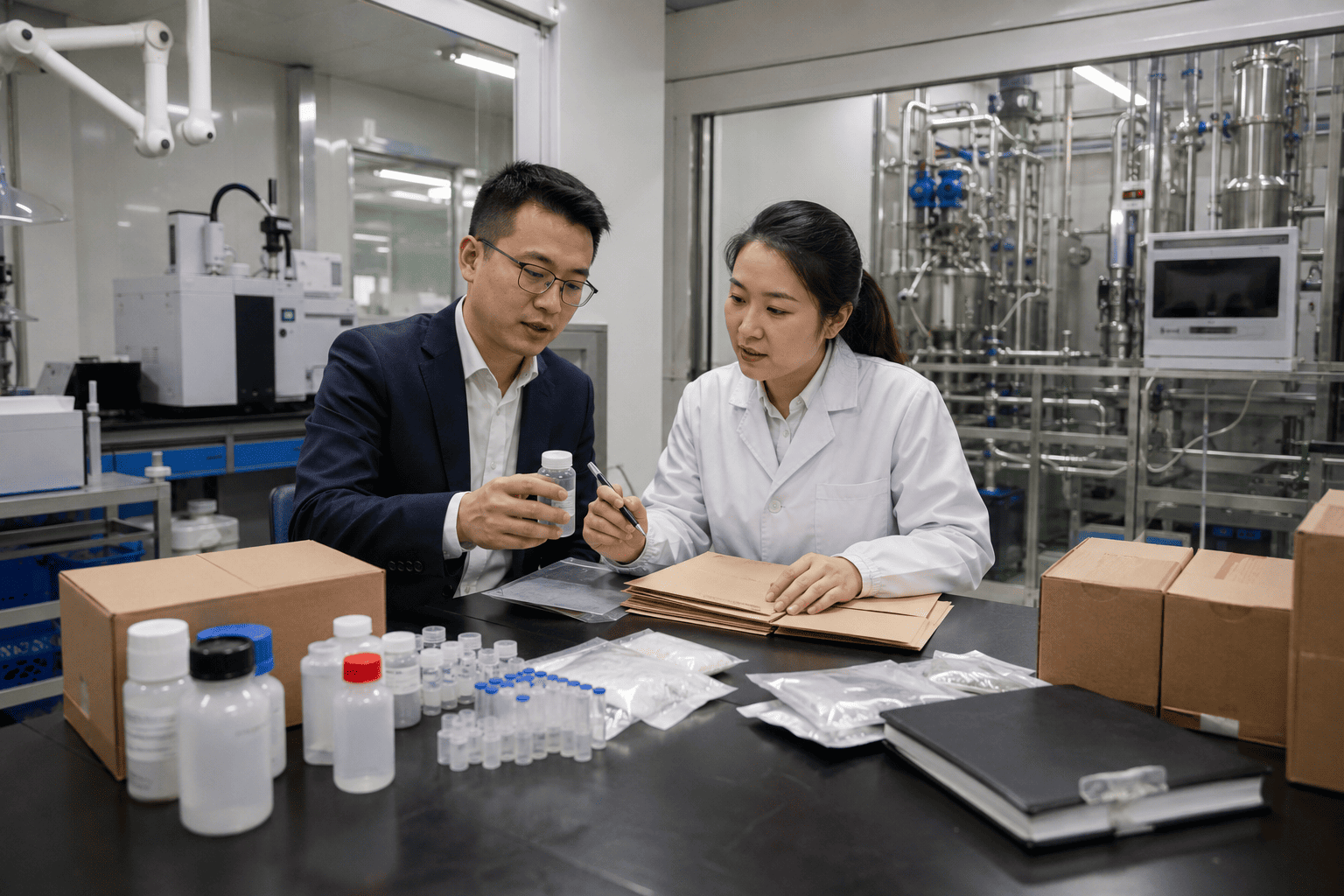
I often tell first-time buyers that supplier evaluation starts before the quotation arrives. A quote is only useful when both sides understand the same requirements.1 So, let’s look at the practical signals I use when judging whether a peptide supplier can support an order safely and consistently.
What Makes a Custom Peptide Synthesis Company Reliable Before Quotation?
Many buyers contact a custom peptide synthesis company and ask only two questions: “What is the price?” and “How fast can you ship?” That sounds efficient, but it often creates risk. If the supplier quotes without checking the sequence, purity, testing needs, and use case, the offer may not reflect the real order.
A reliable supplier asks smart questions before giving a meaningful quote. The company should confirm the peptide sequence, modifications, target purity, quantity, analytical method, salt form, packaging, and intended research or commercial use.2 This early communication shows whether the supplier understands risk before production begins.
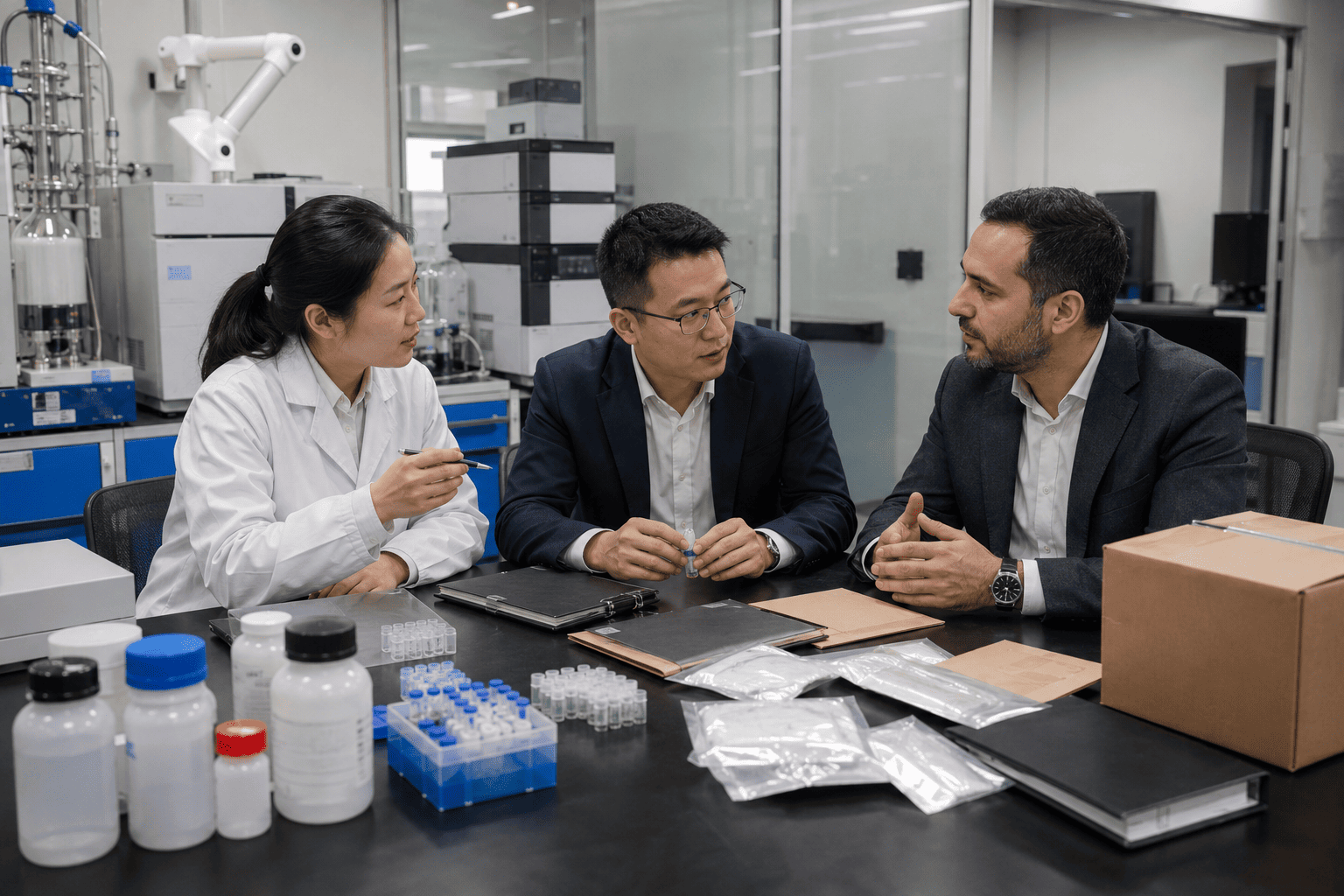
Reliability Starts With Requirement Confirmation
In my daily export communication, I often see the same pattern. A customer sends a sequence and asks for “best price.” Sometimes the sequence includes modifications, unusual residues, long chain length, or hydrophobic regions3. If I reply with only a price, I may appear fast, but I am not being useful.
A serious supplier should slow down just enough to confirm the important details. This does not mean the supplier should make the process complicated. It means the supplier should protect the buyer from hidden gaps.
For example, I usually expect these points to be checked before quotation:
- Exact peptide sequence
- N-terminal and C-terminal modifications
- Disulfide bonds or cyclization4
- Target purity, such as crude, >85%, >90%, >95%, or >98%
- Required quantity, such as 5 mg, 50 mg, 1 g, or larger
- Testing method, such as HPLC and MS5
- Salt form, such as TFA, acetate, or HCl, when relevant
- Packaging, such as vial size, aliquoting, or light protection
- Shipping destination and temperature needs
- Documentation, such as COA, HPLC chromatogram, MS report, or SDS
Why This Matters for Procurement Risk
A weak inquiry process can lead to a weak order. If the purity is unclear, one supplier may quote crude peptide while another quotes >95% purity. If testing is unclear, one supplier may include only mass confirmation while another includes HPLC and MS. If packaging is unclear, the buyer may receive a format that does not fit internal handling.
Here is a simple way I compare early supplier behavior:
| Supplier Behavior | Risk Level | What It Suggests |
|---|---|---|
| Quotes immediately with no questions | High | The supplier may be chasing the order, not checking feasibility |
| Asks only quantity and destination | Medium | The supplier may understand sales, but not enough technical risk |
| Confirms sequence, purity, testing, packaging, and documents | Lower | The supplier is trying to define the order clearly |
| Explains possible synthesis or purification challenges | Lower | The supplier may have real production communication experience |
My Practical Rule
I do not expect every salesperson to act like a peptide chemist. However, I do expect a custom peptide synthesis company to have a communication process that connects sales, technical review, production, and quality control.
> A reliable quote is not just a number. It is a controlled summary of what the supplier believes it can make, test, document, pack, and ship.
When I see a supplier ask detailed but relevant questions, I usually view that as a positive sign. It means the company is not just selling a peptide. It is trying to define the order correctly before money changes hands.
How Should I Compare Quotes From a Custom Peptide Synthesis Company?
Many buyers compare peptide quotes like they compare simple commodities. They place prices side by side and choose the lowest one. I understand that pressure because procurement teams must control budgets. However, peptide quotes are not comparable unless the technical scope, documentation, and support terms are also comparable.6
You should compare quotes from a custom peptide synthesis company by checking purity, quantity, testing method, included documents, packaging, delivery terms, shipping scope, payment terms, and after-sales support. A cheaper quote may become expensive if it excludes testing, documentation, proper packaging, or realistic delivery handling.

The Problem With “Price Only” Comparisons
I have spoken with buyers who received three peptide quotations and felt confused. One supplier looked 30% cheaper. Another supplier promised faster delivery. A third supplier asked many questions and gave a higher price. At first glance, the choice seemed obvious. Later, the buyer noticed that each quote covered a different scope.
This happens often in custom peptide procurement. A low quote may not include:
- The same target purity
- The same analytical confirmation
- The same amount after purification
- The same documentation package
- The same packaging method
- The same shipping responsibility
- The same remake or dispute handling policy
A quote can look cheaper because it carries less responsibility.
A Better Quote Comparison Checklist
When I compare suppliers, I like to turn each quotation into a table. This makes hidden differences visible.
| Comparison Item | Supplier A | Supplier B | Supplier C |
|---|---|---|---|
| Peptide sequence confirmed | Yes / No | Yes / No | Yes / No |
| Target purity | >95%? | >90%? | Crude? |
| Quantity basis | Final purified amount? | Crude amount? | Unclear? |
| Testing included | HPLC + MS? | MS only? | Not stated? |
| COA included | Yes / No | Yes / No | Yes / No |
| Lead time | Working days? Calendar days? | Unclear? | Conditional? |
| Packaging | Single vial? Aliquoted? | Not stated? | Custom? |
| Shipping term | Included? Excluded? | Door-to-door? | Airport only? |
| After-sales support | Defined? | Unclear? | None stated? |
This table helps procurement teams avoid false savings. It also helps researchers and brand owners ask better follow-up questions.
Questions I Suggest Asking Before Accepting a Quote
A reliable custom peptide synthesis company should be able to answer these questions without becoming defensive:
- Is the quoted quantity the final purified amount?
- Which analytical methods are included?
- Will the COA include purity and molecular weight confirmation?
- What happens if the target purity is not achieved?
- What packaging format is included in the price?
- Is shipping included, and what courier or route is expected?
- What delay risks should I know before placing the order?
- Who responds if my team has questions after delivery?
What I Have Learned From Repeated Order Discussions
In my experience, strong buyers do not always ask for the lowest price. They ask for the clearest quote. They want to know what is included, what is not included, and what happens if production does not go perfectly.
This is especially important for overseas buyers in Europe, North America, Australia, and New Zealand. International shipping, customs documents, and temperature control can affect the total order experience.7 A quote that ignores these points may look simple, but it may not reduce procurement risk.
I believe a good supplier welcomes detailed comparison. Clear buyers make clearer orders. Clear orders create fewer disputes.
Are Fast Delivery Promises From a Custom Peptide Synthesis Company Always Good?
Fast delivery sounds attractive, especially when a research schedule, retail launch, or internal project depends on timing. However, unrealistic delivery promises can create more stress than value. If a supplier promises speed without explaining synthesis, purification, testing, documentation, and shipping uncertainty, the buyer should ask more questions.
Fast delivery from a custom peptide synthesis company is useful only when the timeline is realistic and transparent. The supplier should explain which steps are predictable, which steps may vary, and how delays will be communicated. A promise without feasibility review is not a reliable delivery plan.
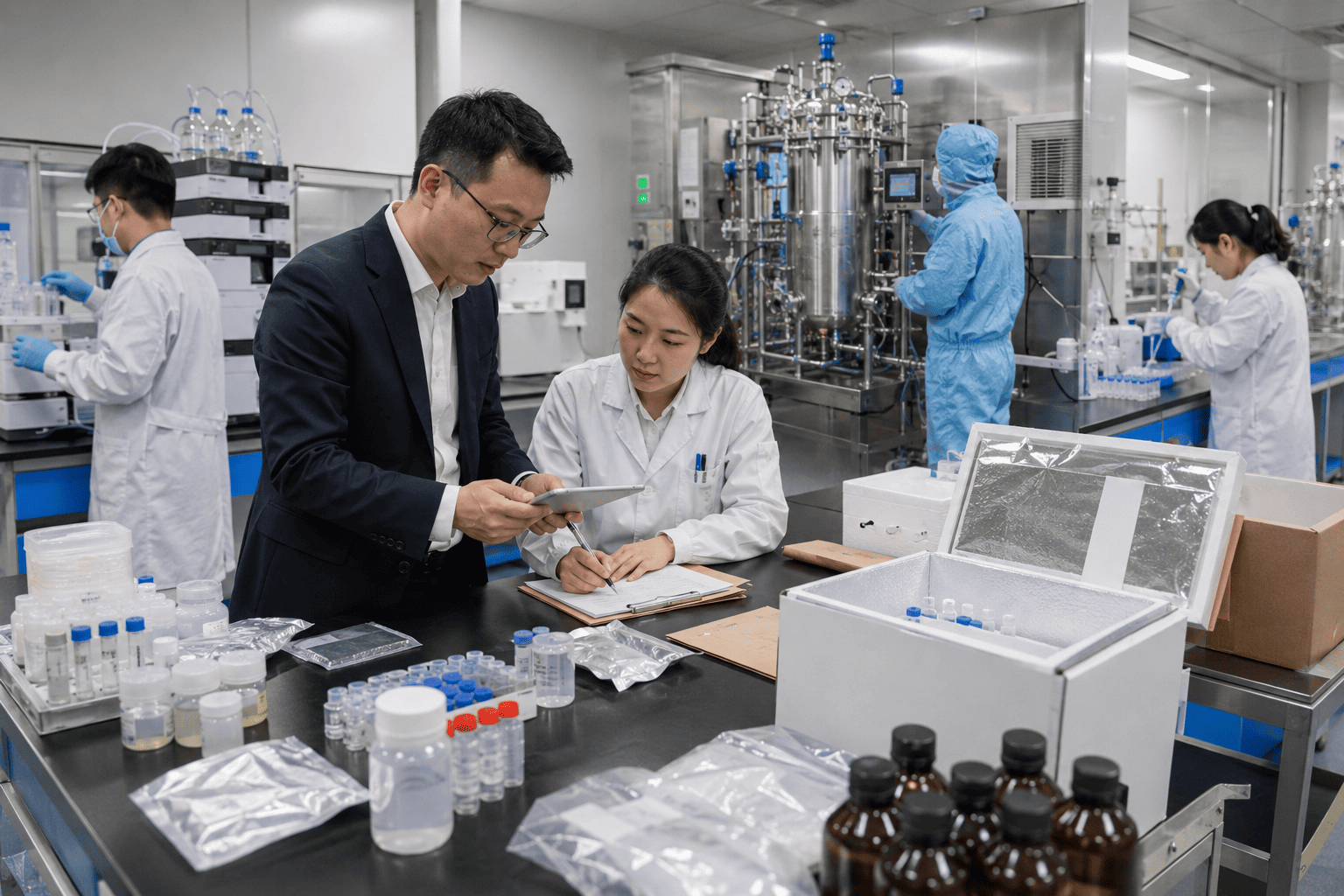
Why Peptide Timelines Can Change
Custom peptide work is not the same as shipping a stocked item. Even when a supplier has strong production ability, several steps may affect the timeline.
- Technical review
- Raw material preparation
- Peptide synthesis
- Cleavage and crude handling
- Purification
- Lyophilization
- HPLC and MS testing
- COA and document preparation
- Packaging
- International shipping
Some short and simple peptides may move quickly. Some modified, long, hydrophobic, or difficult sequences may need more time.9 Purification can also take longer than expected if impurities are close to the target product.10 Testing and documentation may add extra time when the buyer needs specific reports.
How I Read Delivery Promises
I do not reject a supplier just because it offers fast lead time. Speed can be a real advantage. However, I pay attention to the language used.
| Delivery Statement | My Interpretation |
|---|---|
| “We can ship very fast, no problem.” | Too vague |
| “Lead time is 2 weeks for simple sequences, after confirmation.” | More realistic |
| “This sequence may require extra purification time.” | Good risk awareness |
| “We will update you after synthesis and before shipping.” | Good communication practice |
| “If target purity is difficult, we will discuss options.” | Better expectation management |
A reliable custom peptide synthesis company does not hide uncertainty. It explains uncertainty in a way that helps the buyer plan.
What Buyers Should Ask About Timeline
Before accepting a fast promise, I suggest asking:
- Does the lead time start after payment, sequence confirmation, or raw material readiness?
- Does the timeline include QC testing and document preparation?
- Does the timeline include international shipping?
- What happens if purification takes longer?
- Will you notify me at key production stages?
- Can you separate partial shipments if some peptides finish earlier?
These questions are simple, but they prevent many misunderstandings.
A Small Anecdote From Export Communication
I once discussed an order where the buyer needed several peptides for a project deadline. At first, the buyer asked only for the fastest shipment date. After we reviewed the list, some sequences looked standard, while others had modifications that required more careful handling. The buyer later told me that the realistic timeline helped their internal team adjust the experiment plan.
That experience reminded me that honesty about timing can be more valuable than an aggressive promise. A supplier should not win an order by making a deadline sound easier than it is. A supplier should win trust by explaining what can be controlled and what must be monitored.
What Documents and Quality Details Should I Confirm With a Custom Peptide Synthesis Company?
Documentation can feel boring during early communication, but it becomes very important after delivery. Buyers often discover too late that the documents they need were not included. This can delay internal approval, research use, resale preparation, or quality review.
You should confirm COA, HPLC chromatogram, MS report, purity specification, molecular weight confirmation, batch number, storage conditions, SDS availability, packaging label, and shipping documents with a custom peptide synthesis company before ordering. Clear document expectations prevent disputes and make internal review easier.

Documents Are Part of the Product
In peptide purchasing, the physical vial matters. However, the documents around that vial also matter. Researchers may need analytical data to confirm identity and purity. Procurement teams may need batch traceability. Retailers and brand owners may need organized files for supplier records.
A custom peptide synthesis company should explain what documents are standard and what documents require extra confirmation.
Common documents may include:
- Certificate of Analysis (COA)
- HPLC chromatogram
- Mass spectrometry report
- SDS
- Product specification sheet
- Packing list
- Commercial invoice
- Air waybill or tracking record
- Storage and handling recommendation
- Batch or lot number information
Not every order needs every document. However, the buyer should know what will be provided.
Quality Details That Affect Buyer Evaluation
Quality is not just one word. It should be connected to measurable details.
Here are practical quality points to confirm:
| Quality Detail | Why It Matters |
|---|---|
| Purity percentage | It affects suitability for research or downstream use |
| Testing method | HPLC and MS provide different information11 |
| Molecular weight | It helps confirm peptide identity |
| Net peptide content | It may matter for accurate dosing or formulation work |
| Counterion or salt form | It can affect solubility and handling12 |
| Storage condition | It protects peptide stability after receipt |
| Batch number | It supports traceability |
| Appearance | It helps identify obvious handling issues |
Avoiding Document Gaps
Some buyers assume a COA always includes full analytical graphs. That is not always true. Some suppliers provide a summary COA by default and separate HPLC or MS reports upon request. Some may charge extra for special testing. Some may not support a requested format.
That is why I prefer to clarify the document package before the purchase order. A simple sentence can save trouble:
> “Please confirm that the quote includes COA, HPLC chromatogram, MS report, batch number, storage condition, and labeled packaging.”
This sentence gives the supplier a chance to confirm or correct the scope.
Why This Matters for Different Buyers
Different customers care about different document details:
- Researchers may focus on purity, molecular weight, and sequence confirmation.
- Academic buyers may need files for lab records and grant-related purchasing.
- Company procurement teams may need supplier records, invoices, and batch traceability.
- Beauty peptide retailers may need organized documentation for product files and customer confidence.
- Brand owners may need consistent naming, labels, and repeat batch tracking.
I do not recommend choosing a supplier based only on certificates shown on a website. Certificates can be useful, but they do not replace order-specific documents. The more important question is whether the supplier can provide the right documents for your specific peptide, batch, and destination.
How Does After-Sales Support Reveal Long-Term Reliability?
Many suppliers look good before payment. The real test often comes after delivery. If the buyer has questions about purity data, storage, solubility, packaging, customs documents, or delivery delay, the supplier’s response shows whether it values long-term cooperation.
After-sales support reveals whether a custom peptide synthesis company can handle questions, provide supplementary documents, explain quality data, respond to shipping issues, and discuss disputes transparently. Reliable suppliers do not disappear after shipment. They stay available when the buyer needs clarification or practical support.
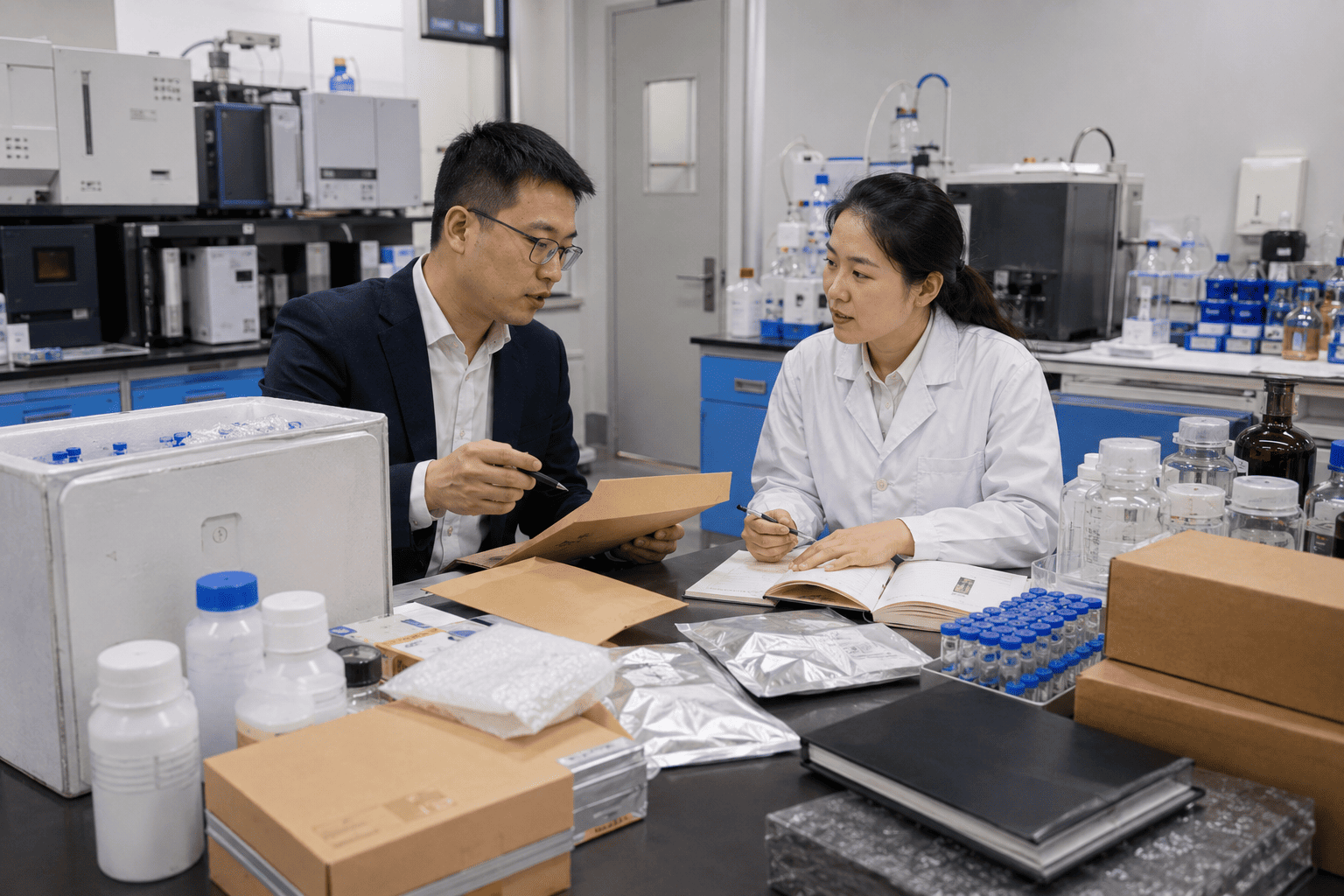
Why After-Sales Support Matters
Custom peptide orders can involve technical and logistical questions after arrival. A buyer may open the package and need clarification about storage. A researcher may ask why the peptide dissolves differently than expected. A procurement team may need an extra document for internal filing. A courier may request additional customs information.
These issues do not always mean the supplier made a mistake. However, they do require communication. A reliable custom peptide synthesis company should respond with patience and records.
Common after-sales questions include:
- “Can you resend the COA?”
- “Can you provide the HPLC chromatogram in a clearer file?”
- “Can you explain the MS result?”
- “What storage temperature do you recommend?”
- “Can you confirm the batch number?”
- “Can you help with customs clearance information?”
- “What should we do if the package is delayed?”
- “Can you review our concern about appearance or solubility?”
Good Support Is Not the Same as Saying “Yes” to Everything
Reliable after-sales support does not mean the supplier must accept every claim without review. It means the supplier should respond logically and transparently.
For example, if a buyer reports a quality concern, the supplier should be able to:
- Check the batch record.
- Review the COA and analytical data.
- Ask for photos or handling details if needed.
- Explain possible causes.
- Provide supplementary documents when available.
- Discuss reasonable next steps.
This process protects both sides. It helps the buyer get answers. It also helps the supplier avoid emotional disputes.
Long-Term Buyers Notice Communication Patterns
In my experience, repeat customers remember how a supplier handles problems more than how it handles easy orders. Smooth orders are good, but difficult moments reveal character.
A strong supplier communicates when:
- Production takes longer than expected.
- Purification needs another round.
- Testing must be repeated.
- A document needs correction.
- Shipping faces delay.
- The buyer asks a difficult quality question.
A weak supplier may avoid the conversation, give vague answers, or blame external factors without explanation.
How to Test Support Before Ordering
You can test after-sales quality before placing a large order. Start with a small inquiry or pilot batch and observe the response.
Ask questions such as:
- “If I need additional documents after delivery, how do I request them?”
- “Who handles technical questions after shipment?”
- “How do you handle delay updates?”
- “What is your process if the final purity is below target?”
- “Can you support repeat orders with the same specification?”
The answers do not need to be perfect. They need to be clear, consistent, and realistic.
For long-term procurement, I prefer suppliers who are calm, specific, and accountable. A reliable custom peptide synthesis company should help reduce uncertainty from inquiry to delivery and beyond.
Frequently Asked Questions
What is the most important factor when choosing a custom peptide synthesis company?
The most important factor is not price alone. I recommend judging whether the supplier confirms technical requirements, explains feasibility, provides clear documentation, communicates realistic timelines, and supports questions after delivery. These behaviors reduce procurement risk more than a low headline price.
How do I know if a peptide quote is truly comparable?
A peptide quote is comparable only when purity, quantity basis, testing method, documentation, packaging, delivery scope, and after-sales terms are clear. If one quote includes HPLC and MS reports while another does not, the prices are not truly equal.
Should I always choose the fastest peptide supplier?
No. Fast delivery is valuable only when the supplier explains the production and testing timeline realistically. If the sequence is difficult or documentation is required, an overly aggressive lead time may create risk. I prefer speed with transparency.
What documents should I request for a custom peptide order?
I usually suggest requesting a COA, HPLC chromatogram, MS report, batch number, storage condition, product label information, packing list, and invoice. Some orders may need SDS or other files. Confirm the document package before placing the order.
Can one custom peptide synthesis company make every peptide sequence?
No supplier should claim it can synthesize every sequence without review. Some peptides are more challenging because of length, hydrophobicity, modifications, cyclization, or purification difficulty. A reliable supplier reviews feasibility and explains risks before accepting the order.
Conclusion
Choosing a reliable custom peptide synthesis company is really about reducing risk. I look beyond the lowest price, fastest delivery, and best-looking website. I focus on requirement confirmation, quotation clarity, realistic timelines, document support, and after-sales communication. If you are planning a custom peptide order for research, procurement, retail, or product development, prepare your sequence and document needs first. Then contact suppliers who are willing to discuss the details clearly before they quote.
---"Part 16 - Types of Contracts", https://www.acquisition.gov/far/part-16. Quality-management guidance treats review and clarification of customer requirements as part of controlled order acceptance, supporting the view that a quotation is meaningful only when its technical and commercial scope is mutually understood; this is contextual support rather than evidence about peptide suppliers specifically. Evidence role: general_support; source type: institution. Supports: A neutral quality-management or procurement source should support that suppliers should review and clarify customer requirements before accepting or quoting an order.. Scope note: The source would support the general procurement principle, not prove that any named peptide synthesis company follows it. ↩
"DNA/Peptide Synthesis Core – Core Research Facilities - HSC Cores", https://cores.utah.edu/dna-peptide-synthesis/. Academic peptide synthesis service guidelines commonly require submission of the sequence, modifications, desired purity, quantity, salt form, and analytical characterization needs, supporting the article’s list of specifications as customary order information; the source would not establish a universal industry requirement. Evidence role: general_support; source type: education. Supports: A university peptide synthesis core or academic service guideline should show that sequence, modifications, purity, quantity, salt form, and analytical characterization are common order parameters.. Scope note: University service requirements may reflect local operational practice rather than a binding industry standard. ↩
"Challenges and Perspectives in Chemical Synthesis of Highly ...", https://pmc.ncbi.nlm.nih.gov/articles/PMC7064641/. Reviews of solid-phase peptide synthesis describe long and hydrophobic sequences, aggregation-prone regions, and nonstandard residues as factors that can lower synthesis efficiency and complicate purification, supporting their use as pre-quotation risk indicators. Evidence role: mechanism; source type: paper. Supports: A peer-reviewed review should explain that peptide length, hydrophobicity, aggregation, and nonstandard residues can reduce coupling efficiency or complicate purification.. ↩
"Directing the oxidative folding of disulfide-rich peptides for ... - PMC", https://pmc.ncbi.nlm.nih.gov/articles/PMC12509089/. Peer-reviewed peptide synthesis literature identifies disulfide formation and cyclization as sequence-dependent operations that may require specialized protecting-group strategies, oxidation or cyclization conditions, and analytical confirmation, supporting their inclusion in pre-quotation review. Evidence role: mechanism; source type: paper. Supports: A peer-reviewed peptide synthesis review should support that disulfide formation and cyclization often require additional synthetic strategy and verification.. ↩
"HPLC Analysis and Purification of Peptides - PMC", https://pmc.ncbi.nlm.nih.gov/articles/PMC7119934/. Analytical peptide characterization literature describes high-performance liquid chromatography as a common method for assessing purity and mass spectrometry as a common method for confirming molecular mass, supporting the article’s identification of HPLC and MS as relevant testing methods. Evidence role: definition; source type: paper. Supports: A scholarly source should support that HPLC is commonly used to assess peptide purity and MS is commonly used to confirm molecular mass or identity.. ↩
"Part 14 - Sealed Bidding - Acquisition.GOV", https://www.acquisition.gov/far/part-14. Public procurement guidance generally requires bids or quotations to be evaluated against defined specifications and deliverables, supporting the article’s point that price comparisons are unreliable when technical scope and documentation differ; this is contextual procurement support, not peptide-specific evidence. Evidence role: general_support; source type: government. Supports: A public procurement or bid-evaluation source should support that price comparisons require a common technical specification and defined deliverables.. Scope note: The source would substantiate the general bid-comparison principle rather than the custom peptide market specifically. ↩
"Importing Biological Materials into the United States", https://www.cbp.gov/border-security/protecting-agriculture/importing-biological-materials-united-states. International guidance on temperature-sensitive health-product transport recognizes documentation, customs clearance, and temperature-control requirements as factors affecting shipment handling and delivery, providing contextual support for the article’s logistics-risk claim. Evidence role: general_support; source type: institution. Supports: An international logistics or health-products transport source should support that customs documentation and temperature-control requirements can affect shipment handling and delivery.. Scope note: Such guidance may address pharmaceuticals or health products broadly and may not directly study custom research peptide shipments. ↩
"Introduction to Peptide Synthesis - PMC - NIH", https://pmc.ncbi.nlm.nih.gov/articles/PMC3564544/. Reviews of solid-phase peptide synthesis describe a workflow that includes chain assembly, cleavage or deprotection, purification, lyophilization, and analytical characterization, supporting the article’s outline of common production steps; packaging and shipping are operational extensions rather than core chemical steps. Evidence role: historical_context; source type: paper. Supports: A review or academic overview should support the typical workflow stages in synthetic peptide production and characterization.. Scope note: The source would directly support the chemical and analytical stages, while logistics and document preparation would be contextual. ↩
"Challenges and Perspectives in Chemical Synthesis of Highly ...", https://pmc.ncbi.nlm.nih.gov/articles/PMC7064641/. Peptide synthesis reviews report that long, hydrophobic, modified, or aggregation-prone sequences can require additional coupling, deprotection, purification, or analytical optimization, supporting the article’s statement that such sequences may require more time. Evidence role: mechanism; source type: paper. Supports: A peer-reviewed source should support that difficult sequence features can require additional synthesis optimization, purification, or analysis, which can extend timelines.. ↩
"Improvement of Analysis and Transferability in Peptide ... - PMC", https://pmc.ncbi.nlm.nih.gov/articles/PMC12890753/. Chromatography literature on peptide purification notes that closely related impurities, including deletion sequences or side products with similar retention behavior, can complicate separation and require additional method development, supporting the article’s statement about purification delays. Evidence role: mechanism; source type: paper. Supports: A chromatography or peptide purification source should support that closely related impurities can be difficult to separate from the desired peptide.. ↩
"HPLC Analysis and Purification of Peptides - PMC", https://pmc.ncbi.nlm.nih.gov/articles/PMC7119934/. Analytical references for synthetic peptides distinguish chromatographic purity assessment by HPLC from molecular-mass confirmation by mass spectrometry, supporting the article’s statement that the two methods provide different kinds of quality information. Evidence role: definition; source type: research. Supports: A research or academic analytical source should distinguish HPLC purity assessment from MS molecular-mass confirmation.. ↩
"Impact of counterion and salt form on the properties of long-acting ...", https://pmc.ncbi.nlm.nih.gov/articles/PMC12076187/. Peptide formulation studies report that counterions and salt forms can influence physicochemical properties such as solubility, hygroscopicity, and handling behavior, supporting the article’s statement that counterion or salt form may affect solubility and handling. Evidence role: mechanism; source type: paper. Supports: A peer-reviewed formulation or peptide chemistry source should support that counterions and salt forms can influence peptide solubility, stability, or handling.. ↩